
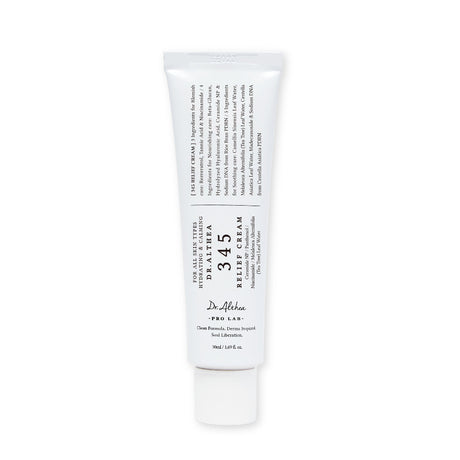
![[Dr. Althea] 345 Relief Cream](http://www.yeppo.fi/cdn/shop/files/Dr._Althea-345-Relief-Cream-renewal-1.jpg?v=1769059724&width=460)
![[Dr. Althea] 345 Relief Cream](http://www.yeppo.fi/cdn/shop/files/Dr._Althea-345-Relief-Cream-renewal-2.jpg?v=1769059842&width=460)
![[Dr. Althea] 345 Relief Cream](http://www.yeppo.fi/cdn/shop/files/Dr._Althea-345-Relief-Cream-renewal-3.jpg?v=1769059842&width=460)
![[Dr. Althea] 345 Relief Cream](http://www.yeppo.fi/cdn/shop/files/Dr._Althea-345-Relief-Cream-renewal-4.jpg?v=1769059842&width=460)
![[Dr. Althea] 345 Relief Cream](http://www.yeppo.fi/cdn/shop/files/Dr._Althea-Cream-Comparision.webp?v=1777545317&width=460)
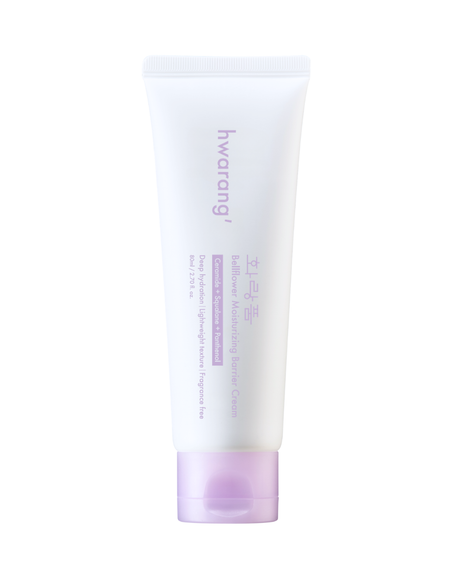
![[hwarang'] Bellflower Moisturizing Barrier Cream](http://www.yeppo.fi/cdn/shop/files/hwarang-barrier-cream.webp?v=1748334811&width=460)
![[hwarang'] Bellflower Moisturizing Barrier Cream](http://www.yeppo.fi/cdn/shop/files/hwarang_bellflower_barrier_cream.jpg?v=1748334811&width=460)
![[hwarang'] Bellflower Moisturizing Barrier Cream](http://www.yeppo.fi/cdn/shop/files/hwarang-barrier-cream-mood3.webp?v=1748334811&width=460)
![[hwarang'] Bellflower Moisturizing Barrier Cream](http://www.yeppo.fi/cdn/shop/files/hwarang-barrier-cream-mood.webp?v=1748334811&width=460)
![[hwarang'] Bellflower Moisturizing Barrier Cream](http://www.yeppo.fi/cdn/shop/files/hwarang-barrier-cream-texture.webp?v=1748334811&width=460)
Retinol is a topical, over-the-counter derivative of vitamin A and one of the most effective active ingredients for treating and preventing signs of aging.
Benefits of retinol in skincare
- effectively treats signs of aging by reducing fine lines
- smooths skin texture
- reduces enlarged pores
- evens out skin tone and fades pigmentation changes
- activates the skin's own renewal process

How to start using retinol?
The use of retinol and other retinoids, such as retinal, is started gradually.
You can start using products with low retinol concentrations by adding the product to your skincare routine once a day. However, if your skin is sensitive to new ingredients, we recommend following the same approach as with stronger retinol products.
It is advisable to start using products with medium and high retinol concentrations gradually, even if you have previously used lower concentrations of retinol.
- Start by adding a product containing retinol or retinal to your skincare routine two non-consecutive nights per week. Continue this for two weeks.
- Next, you can increase usage to three non-consecutive nights per week. Continue for another two weeks.
- After this, you can increase retinol use to every other day, and if your skin tolerates it, after the adjustment period, to every day.
It is always recommended to start using retinol at lower concentrations and gradually move to higher concentrations over time. If you start directly with stronger concentrations, your skin may become irritated and react strongly to the introduction of retinol; this may appear as redness and peeling of the skin.
Tingling sensation caused by retinol
The tingling sensation caused by retinol on the skin immediately after application is completely normal and disappears quickly as the product absorbs into the skin. If the tingling persists for a long time or you notice other skin symptoms, stop using the product and consult a dermatologist.
You can only find your skin's tolerance to retinol strength and usage frequency by trying it out. If your skin reacts strongly when you increase usage, try spacing out the application. Using retinol just 2-3 times a week provides many benefits. However, to maintain the benefits of retinol, you need to continue using it regularly.
Who is retinol suitable for?
Everyone can benefit from using retinol; the more important question is at what strength it should be added to the skincare routine. Practically, how much retinol your skin needs depends on your skin’s condition and tolerance to its use. Retinol use can start as early as age 25-30 if you suffer from issues like hyperpigmentation or pimples. Starting retinol in your thirties also helps prevent the formation of aging signs, which is always more effective than trying to repair damage later. Retinol is also very beneficial for acne-prone skin, as it promotes skin renewal and fades hypierpigmentation.
Retinol for beginners and dry, sensitive skin
Concentration: 0.01%-0.03%. When used at low concentrations together with other antioxidant-rich active ingredients during the day, retinol has been scientifically shown to effectively combat air pollution. Just remember to always finish your skincare routine with at least SPF 30.
Retinol is a proven effective ingredient even at low concentrations; as little as 0.01% or more produces positive effects on signs of skin aging, pore reduction, and overall skin condition.
For beginners and sensitive skin, other forms of vitamin A, such as retinaldehyde, may be more suitable.
We recommend:[K-SECRET] SEOUL 1988 Serum : Retinal Liposome 2% + Black Ginseng

Retinol for uneven skin tone and impurities
Concentration: 0.03%-0.3%
If you suffer from uneven skin tone or texture or acne, we recommend trying about 0.2% retinol as part of your skincare routine. Start by using it two non-consecutive nights per week, and increase usage as your skin's tolerance grows.
Retinol combined with other active ingredients can enhance skincare effectiveness. The safest way is to choose a product that already contains a suitable amount of two different active ingredients, such as salicylic acid and retinol. Combining these is possible, but it is important to consider your skin's individual tolerance.
We recommend:[Innisfree] Gentle Retinol Salicylic Acne Serum

Retinol for wrinkles and very uneven skin tone
Concentration: 0.3%-1%
Those suffering from deep wrinkles and severe uneven skin tone can benefit from retinol in high concentrations, either in cream or serum form. High-concentration retinol and retinal products can bring quick visible benefits to skin types that have not achieved desired results from lower concentrations.
We recommend:[Dr. Different] VITALIFT-A Fortessimo

Can retinol be used in summer?
Retinol is a fantastic ingredient in skincare routines all year round! You can use it summer and winter, as the best benefits come from regular use as part of your skincare routine. However, always remember to combine retinol with sunscreen, as sunscreen supports the results retinol provides and keeps your skin protected.
Retinol use is always started cautiously, but the goal is to use it once a day to maintain its benefits.
What ingredients can you combine with retinol?
Although retinol is an excellent ingredient for anti-aging properties, improving signs of aging requires more than just one solution. Retinol is recommended to be used together with other complementary anti-aging and antioxidant ingredients, such as niacinamide.
Retinol works well when used together with, for example, the following ingredients:
- peptides
- ceramides
- hyaluronic acid
- niacinamide
Peptides and retinol should be combined in the evening, as retinol helps peptides absorb and thus firms the skin, and peptides also effectively moisturize the skin, which helps if retinol has a drying effect on your skin.
A common misconception is that retinol cannot be combined with exfoliating AHAs like glycolic acid or BHAs like salicylic acid. In reality, retinol does not have exfoliating properties like AHA and BHA acids, and studies have shown that the anti-aging effects of retinol are enhanced when combined with the aforementioned acids at the correct concentrations. The low pH of exfoliating acids also does not negate the effect of retinol.
Another persistent myth about retinol is its combination with vitamin C, which is based on a misunderstanding of pH balance and acidity. Vitamin C (especially ascorbic acid) requires a low pH to remain stable or no pH at all if the formula contains no water. The result is a more acidic formula, but studies have shown that acidity does not negate retinol’s effect; the skin’s natural pH is acidic, and retinol is naturally present in our skin. Instead, studies have found that combining vitamins (both retinol, a derivative of vitamin A, and vitamin C) creates better conditions for retinol by stabilizing its environment and thus prolonging its effect. Using an antioxidant serum together with retinol can therefore enhance the effect of the retinol product, contrary to previous misconceptions. However, when used in high concentrations, we recommend alternating the use of retinol and vitamin C by applying one in the morning and the other in the evening.
Can retinol be used during the day?
Besides the myths about combining the retinoids and active ingredients mentioned above, one of the most persistent misconceptions is that retinol or retinal cannot be used during the day.
However, this is not true; skincare products containing retinoids can be perfectly used as part of your morning routine, as long as you also apply sunscreen with at least SPF 30.
Studies have shown that retinol as well as vitamins A and C generally remain stable in sunlight, provided sunscreen is applied afterward.
See our full range of retinol products

What about other forms of vitamin A? Learn the differences between retinol, retinal, and how bakuchiol relates to these in this article!


 info@yeppo.fi
 14 vrk palautusoikeus
 SSL Encryption
 Secure Checkout
 PCI-DSS Compliant
 PayPal Buyer Protection
 Klarna – Pay Securely
![[A'pieu] Banana Milk One-Pack Sheet Mask](http://www.yeppo.fi/cdn/shop/products/6c7a85_417e0a8a8d0847a69585a88fe2eaaa26_mv2.jpg?v=1616347294&width=156)
![[A'pieu] Coffee Milk One-Pack Facemask](http://www.yeppo.fi/cdn/shop/products/6c7a85_7f19d8c618b143ebb2538f2188cc26e6_mv2.jpg?v=1616346654&width=156)
![[A'pieu] Green Tea Milk One-Pack Sheet Mask](http://www.yeppo.fi/cdn/shop/products/a_pieu_green_tea_milk_one_pack_21g.jpg?v=1622302818&width=156)
![[A'pieu] Icing Sweet Bar Sheet Mask Hanrabong](http://www.yeppo.fi/cdn/shop/products/6c7a85_4c6f0810a10a449da62c0d9badf73533_mv2.jpg?v=1616347691&width=156)
![[A'pieu] Icing Sweet Bar Sheet Mask Pineapple](http://www.yeppo.fi/cdn/shop/products/6c7a85_fcc180ff6d2049b987a2662ebe032536_mv2.jpg?v=1616347693&width=156)